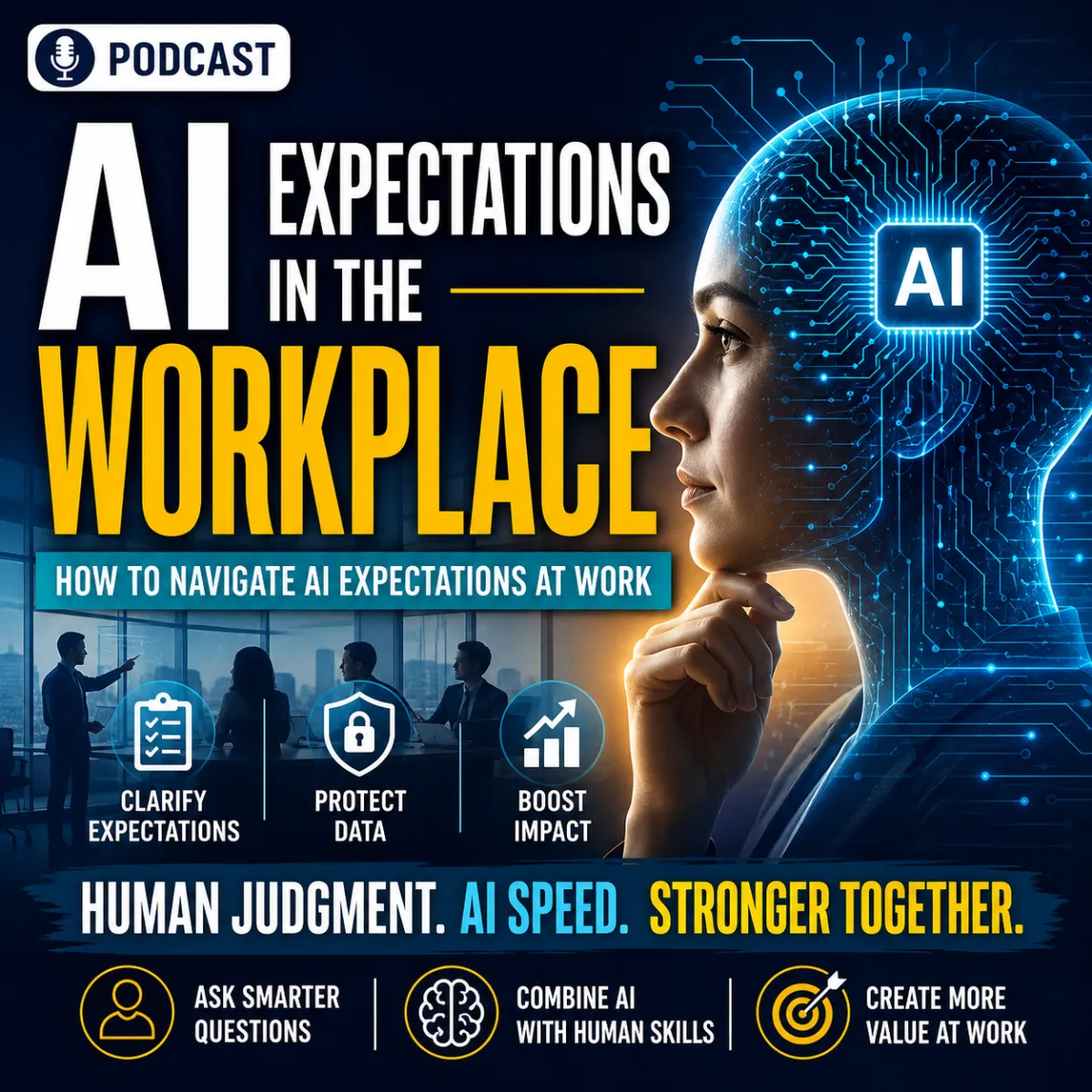
AI Expectations in the Workplace: How to Navigate AI Expectations at Work

Description
The article explores how AI expectations in the workplace are rapidly evolving from optional experimentation into standard professional expectations. It explains why employers increasingly expect employees to use AI tools, how workers should clarify those expectations, and how professionals can turn AI adoption into a long-term career advantage through strategic use of human judgment, creativity, and critical thinking.
---
Summary
Artificial intelligence is becoming a normal part of modern work across many industries. Employers are increasingly encouraging — and sometimes requiring — employees to use AI to improve productivity, efficiency, research, communication, and workflow automation.
The article argues that professionals should not view AI merely as a compliance burden or job threat. Instead, workers should ask intelligent questions about expectations, approved tools, productivity standards, governance boundaries, and performance evaluation criteria.
The central message is that AI alone is not the competitive advantage. The real advantage comes from combining AI capability with distinctly human strengths such as judgment, ethics, creativity, strategic thinking, and relationship-building.
Professionals who actively experiment with AI, clarify expectations, and build AI literacy may significantly increase their long-term career leverage.
---
Quick Overview
Main Theme
AI is becoming an expected workplace skill, and professionals must learn how to adapt strategically.
Core Message
Workers who combine AI tools with strong human judgment may become more valuable, not less.
Main Focus Areas
* Why employers are requiring AI use
* How employees should clarify expectations
* The importance of AI experimentation
* The growing value of human-centered skills
* Practical questions employees should ask managers
---
Key Points
1. AI Is Becoming Standard Workplace Infrastructure
The article compares AI adoption to earlier workplace technologies like spreadsheets, cloud software, and search engines — first optional, then expected.
2. Employers Are Under Pressure
Organizations are adopting AI due to:
* Productivity demands
* Competitive pressure
* Efficiency expectations
* Operational modernization
3. Employees Must Clarify Expectations
Workers should ask:
* Which tasks should use AI?
* Which tasks require human oversight?
* Are productivity expectations changing?
* Which AI tools are approved?
* How will AI use affect performance reviews?
4. AI Skills May Increase Earnings
The article references compensation studies showing AI-related skills and certifications may command salary premiums above base pay.
5. Human Skills Become More Valuable
As AI handles repetitive work, uniquely human abilities become more differentiated:
* Judgment
* Critical thinking
* Creativity
* Ethics
* Decision-making
* Relationship-building
6. Experimentation Creates Career Advantage
Professionals who intentionally experiment with AI workflows often discover major improvements in:
* Research speed
* Communication
* Workflow efficiency
* Strategic analysis
* Decision support
7. AI Should Support Thinking — Not Replace It
The article warns against outsourcing human reasoning entirely to AI systems.
---
Important Details & Evidence
Employer AI Adoption Statistics
The article cites workplace research showing:
* 64% of employers encourage AI use
* 58% reportedly require it in some form
Examples of AI-Assisted Workflows
The article gives practical examples including:
* Drafting first-pass documents
* Summarizing reports
* Brainstorming ideas
* Creating action-item lists
* Testing strategic alternatives
Real Workplace Scenarios
Examples include:
* A marketing strategist using AI for content research and headline testing
* A financial analyst using AI for report summaries while keeping interpretation human-led
* Employees gaining career clarity simply by asking better questions about AI expectations
Governance & Risk Considerations
The article emphasizes the importance of:
* Privacy boundaries
* Compliance rules
* Human review requirements
* Approved enterprise AI tools
* Intellectual property protection
Practical Checklist Included
The article provides a downloadable checklist encouraging employees to ask managers:
* How AI affects productivity expectations
* Which tasks should remain human-led
* What AI skills matter for advancement
* Whether experimentation is encouraged
---
Final Takeaways
AI expectations in the workplace are no longer theoretical. They are becoming operational realities across industries.
The professionals most likely to benefit are not necessarily the earliest adopters, but those who:
* Clarify expectations intelligently
* Experiment strategically
* Build practical AI literacy
* Strengthen human-centered skills
* Use AI to increase the value they create
The future advantage belongs to professionals who successfully combine AI capability with distinctly human judgment.
🎙️ Presented by E Internet Marketing Services, helping small businesses thrive in the age of intelligent technology.
Subscribe for more insights on AI and business transformation! https://aiforbeginners.einternetmarketingservices.com/aifbd-newsletter-subscribe
👉 Learn more about Voice AI Plus: https://einternetmarketingservices.com/voice-ai-learn-more/
💡 This podcast series is inspired by the book, AI for Beginners Demystified
Enjoy the Book Summary (PDF) HERE
Visit the Author's Page: https://ricksamara.com
Get the Book on Amazon: https://www.amazon.com/dp/B0FM47NKPX
Visit the Official Information Page: https://aiforbeginners.einternetmarketingservices.com/home
Ready to explore Galaxy AI? https://galaxy.ai/?ref=richard0z
Let's connect!
Facebook: https://www.facebook.com/eInternetMarketingServices
Website: https://einternetmarketingservices.com
👍 Like this podcast? Give it a thumbs up and share it with your network if you found it helpful!
➡️ Want to learn more? Subscribe to our channel for more AI insights, practical tips and tutorials!
💬 Share this podcast with your fellow AI enthusiasts!
